To Those Newly Diagnosed With ME/CFS: Four Things I Learned the Hard Way

I hit a nerve with my “Nothing” post about what I did (and mostly what I didn’t do) after I was diagnosed. And many of the reactions I heard from others touched on the number one, most important, know-this-if-nothing-else piece of advice I wish every doctor would give to every person diagnosed with ME/CFS.

Item #1: Stay inside your energy envelope.

Here are some of the ways that was said:

Nathalie: “For me if I had known at the beginning what I had and didn’t over do it on good days I might be in a totally different place.”

Kathy D: “After nearly 26 years, I still don’t know what to do except rest most of the time, pace myself very carefully, and take some vitamins.”

Debbie Anderson: “If I had been told by my doctors that by pushing my limits, and burning the candle at both ends, would destroy my vascular and heart systems, I would have listened.”

Breathe Easy: “I feel so strongly that if I had not tried to just push through and act as if the Dx was bogus, I would not be so bad off today.”

Falling ill with ME/CFS is a real down-the-rabbit hole experience. Suddenly, your body, which has always, up to that point, had enough energy to get you through the day, allowing you to do whatever needs doing, just – doesn’t. It’s as if you’ve always made a certain amount of money and all of a sudden you’ve taken a 50% pay cut. In order to maintain a positive balance in your bank account, you must start budgeting differently; your priorities have to change. Since you don’t have enough energy to spend on all the things you used to be able to get done, you have to start making choices.

Now, noting the need for pacing isn’t uncommon advice – but the problem is that it needs to get to the newly diagnosed quickly. People who develop ME/CFS don’t instinctively know that it’s absolutely imperative that they stay within their energy envelope. Why should they? It’s not something they’ve ever needed to do. Plus, it takes time to learn and to shift from that everything-is-normal state to the I-understand-my-limitations state. And oftentimes, it has to be done over and over again as the illness progresses.

Furthermore, our culture does not encourage healthy, well-adapted responses to illness. It rewards pushing through, and so that’s what the newly diagnosed mostly do. Even after you find out you have to stop doing it, it’s hard to turn away from. We think we have to push through; whatever needs doing is more important than giving our bodies time to rest, time to heal. But for people with ME/CFS, responding appropriately to the body’s tiredness is absolutely mandatory. If we don’t do so, we’ll get worse – at least temporarily, and sometimes permanently. Our energy allotment will go down, down, down – and we’ll have less and less energy to “spend.”

So, because of Item #1, Item #2: Rest.

If you suddenly find yourself inexplicably much more tired than you used to be, the way to stay within your energy envelope is to do less and rest more. And resting doesn’t require you to know for sure what is causing your tiredness – you don’t need a conclusive diagnosis in hand. You also don’t need blood tests, a prescription, to spend cash, or to buy equipment in order to do it.

Maybe that, too, sounds obvious – if you’re tired, you should rest, right? But the amount of rest needed in ME/CFS is a whole new ball game for most people. You have to make a real commitment to resting.

Because I’m talking serious rest. Enforced rest. Give yourself permission to rest. For several months at least, to see if it helps. Clear your schedule. Take FMLA. Quit your job. Shed responsibilities. Reduce the amount of stress in your life. Move in with family if you have them and you can. I know none of this is realistic – upending your life just to lie around and do nothing, and potentially drastically reduce your income? Sure, dealing with upending your life for months, maybe a year, is difficult, but dealing with upending your life permanently is worse.

It is a terrible injustice that this illness receives such a paltry amount of funding, and that because of that, there are not better treatments than simply respecting the limits created by the disease. But until we have those better treatments, resting first, and not when the disease forces you to, is what will give you the best chance at recovery.

Item #3: Where you are now is not necessarily where you are going to be.

When I fell ill, there was much less information on the web about ME/CFS than there is now. The two major things that I remember running across were Jodi Bassett’s A Hummingbird’s Guide to ME and Laura Hillenbrand’s essay “A Sudden Illness”, the latter of which was only a couple years old at that point. Reading “A Sudden Illness” was incredibly frightening. Hillenbrand described such awful events, and such terrible incapacity. I couldn’t imagine how she could endure it, and I was grateful that my case of CFS was not as severe as hers.

Well, it wasn’t then, but it eventually was – and even worse than what she describes, too. This illness is variable and changeable. Some people – the very lucky ones – get sick, are sick for a while, and get better or mostly better with minor limitations. Some people get sick to a degree, and pretty much stay at that level of illness from then on. Some people oscillate, getting worse and then better and then worse again. Some people get sick, then sicker, then even more sick.

So I would counsel the newly diagnosed to realize that a lot of things can happen – just because you’re not very sick now doesn’t mean you can’t possibly get worse, or just because you are very sick now doesn’t mean that’ll you’ll never improve. And a major part of the way not to end up very sick is – you guessed it, back to Item #2: Rest.

Item #4: You need a doctor with at least some ME/CFS expertise.

I didn’t think I needed an ME/CFS doctor, and I didn’t know how to find one, and when I did learn how to find one, they were all so far away that I didn’t think it was worth traveling to see one. And if I had had such a doctor, I might have been told Item #1 and Item #2, at a time when it could have done me more good than when I finally figured it out myself, and I might have heard about and started treatment sooner, and I might be in a better spot now.

Because I didn’t have an ME/CFS doctor in the early years of my illness, I was managed by my GP in a hands-off way. She didn’t know anything about treatment, or anything about ME/CFS specialists. And that’s not at all uncommon. ME/CFS is poorly understood by most medical practitioners. Don’t be a guinea pig, someone who is managed without knowledge, or someone who sticks with a doctor who tells you that you must be depressed, that you just need to exercise, or that your illness is all in your head because all the tests are negative.

An ME/CFS doctor who has seen a lot of the illness before you show up in his or her office will know the pitfalls that come along with not knowing what you’re doing in terms of dealing with this illness, and you’ll give yourself the best chance for a good outcome by being under the care of someone who can guide you along the way. You don’t necessarily need to go to one of the few super-specialists who only treat ME/CFS, but you at least need someone who “believes in” and is familiar with the illness. But I would say that if you can get to a super-specialist, do. (You can find ME/CFS doctors and specialists at the ME/CFS Wiki here.)

So those are my suggestions – the things I most wish someone had told me early on. And my story is the same as those quoted above. I did each one of these things wrong in turn.

  • I was a bit of a workaholic, and I had always gotten better after I’d gotten sick, so I didn’t think there was anything wrong with continuing to push myself, even though I was ill.
  • I took about a week off of work, and then went right back. And I kept showing up to work even though I was so tired that I had to put my head down on my desk for ten or fifteen minutes at a time, several times a day.
  • I thought my case was a mild one, so I didn’t treat it with the gravity it deserved. Well, I only had a mild case until I had a moderate case, and then a severe case, then a very severe case.
  • I didn’t have a doctor who knew anything about ME/CFS, and I had never met anyone else who had it, so nobody told me how vitally important it was for me to rest and stay within my energy envelope.

I, and many other ME/CFS patients, have had to learn all of these – and many other things about our illness – the hard way. It shouldn’t be that way. It’s not as if our illness is uncommon, and it’s not as if it’s unpredictable. Until we know how to prevent and how to actually cure it, having good information, starting from go, is the key to allowing patients to have the best chance at recovery.

Now for those of you who have ME/CFS, what do you wish you’d heard when you first fell ill, or what were you told that was most – or least – helpful?

Edited October 8, 2013 to add: Nancy Blake has written an absolutely phenomenal “Radical Care Pathway for ME” that every doctor and newly diagnosed patient should have.

Posted in ME/CFS | Tagged , , , , | 83 Comments

Nothing

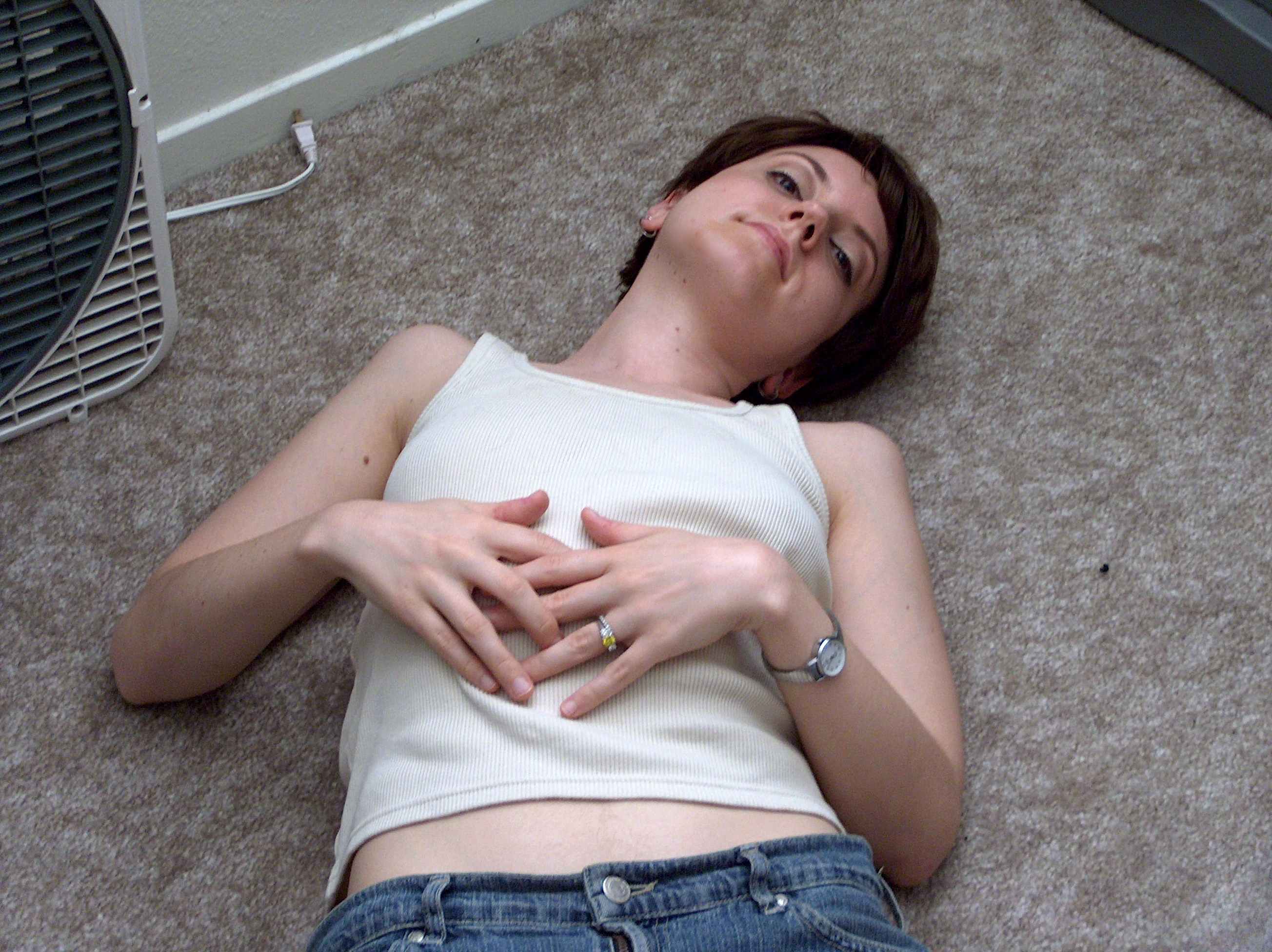
Chimp took this picture of me on August 19, 2004. I'd been sick 2 1/2 months. My muscles have clearly already significantly wasted away.

For every ailment under the sun
There is a remedy, or there is none;
If there be one, try to find it;
If there be none, never mind it.

-Mother Goose Rhyme

What do you do when you’re diagnosed with an illness that has no cure?

This is the question I found myself confronted by in 2004.

Unfortunately, what I did was this: Nothing.

That sounds crazy, right? Finding myself sick in a way I never had been, why wouldn’t I do something about it? Why would I choose to do nothing? The truth is, I did nothing for a whole host of reasons.

  • Nothing, first, precisely because I had learned there was no cure. If there was no cure, then I figured there was nothing to be done about it (“…never mind it.”).
  • Nothing because I rationalized that because there was no cure, anybody who claimed to have a treatment for it was potentially a charlatan.
  • Nothing because since I knew nobody knew the cause, I thought nobody could treat it.
  • Nothing because there were so many different treatments out there, and I didn’t know how to figure out whether any of them were effective.
  • Nothing because I didn’t want to choose the wrong approach and waste my money on something that didn’t work.
  • Nothing because most of the treatments were supplements, and I didn’t really believe that supplements would do any good.
  • Nothing because I had never been seriously ill and I didn’t know how to negotiate the healthcare system in anything but the most basic of ways.
  • Nothing because I didn’t know what specialty my new illness fit in to (turns out that’s a trick question – it doesn’t fit neatly in any of them).
  • Nothing because I didn’t know how to find a doctor who did specialize in my new disease.
  • Nothing because I didn’t understand that I needed one of those.
  • Nothing because when I did finally look for specialists, there was no doctor in my area, and I didn’t think it was worth traveling to see one.
  • Nothing because a bad reaction to a previously well-tolerated over-the-counter medication caused me to develop a phobia of taking any new pills.
  • Nothing because it didn’t make sense to do anything when I could just as well do nothing and have that not work.
  • Nothing because I thought I was dealing okay with the illness on my own, and I didn’t really see what any doctor could do for me, given that there was no cure.
  • Nothing not so much because I decided all at once that I had to get on with my life as that I just kept living as much as I could as I always had.
  • Nothing because I figured that I had always gotten better after I’d gotten sick, and that given time, I would get better.

Somehow, for all of these reasons, nothing was the thing that made the most sense at the time. Lying behind those reasons was some element of choice, a significant amount of inertia, and a lot of plain old ignorance. When I look back on that period now, of course, I see it through the lens of all the years since, and I wish I’d done things much differently. Doing nothing – and that was my approach for several years – did nothing for me except cause me to get worse over time.

Now I know how to deal with my illness. But that’s hard-won knowledge that I gained from my experience of doing nothing, which effectively meant doing everything wrong before I later learned how to do it right. I wish I had spared myself that experience. I definitely wonder whether if things would be different now if I’d had better counsel and made decisions differently from the start.

Because the truth is, doing nothing is not doing nothing. Doing nothing, whether consciously or not, was forgoing potentially helpful interventions. It was failing to respond appropriately to my body’s needs. It was allowing the illness to have its way with me.

If, instead of trying to “never mind it” away, if I’d really understood what I was potentially up against, and planned for the war rather than fought each battle one at a time as it arrived – where might I be?

Posted in ME/CFS | 52 Comments

A Rant About the Illness Narrative

Just for fun, the beginning of my pill bottle collection. I have four bags full at this point.

Over the past seven years, I have had various people tell me, here and there, that they find me “brave” or “inspirational.” And it seems like the sicker I’ve gotten, the more I’ve heard it.

I don’t want to sound ungrateful for the compliments, but the truth is – I really hate this. I don’t begrudge people that they see me that way, because I can understand why they do; it’s just that I don’t personally feel that what I’m doing is necessarily brave, and I certainly don’t consciously aim to be inspirational. I just have this disease, and I do what I can to survive. If you had it, you’d do the same.

Seven years of being ill has given me plenty of time to get familar with this, the dominant narrative imposed on people with severe and/or chronic illness in our culture. The person falls ill, and they battle bravely against their disease. After all, how many times have you heard it said that someone “defeated” cancer, or “lost her battle with” cancer? We have this schema of disease as a war, that it’s something you mount your body’s defenses against via your will, that you show valor by battling bravely, that your fighting against it and not “giving up” is inspirational.

And all that, frankly, is bullshit. I had to learn that the hard way. I really did think, when I fell ill, that my getting better would be a matter of willing myself to. After all, I’d gotten sick plenty of times before, and I’d willed myself to get better, and I got better. But that’s not how it works. Whether you will yourself to get better or not, your body has an immune system, and either it does its job or it doesn’t. You take drugs, and either they work against the disease or they don’t. You undergo chemo, and either it turns the tide or it fails to. Will has fuck all to do with it.

But when people see someone who is managing to live with a disease that they perceive as very disabling, as something that they can’t imagine having to live with themselves, I think they fit that into the “will” framework, not just as a matter of doing what you have to do to put one foot in front of the other, even when you literally can’t put one foot in front of the other.

And speaking of “other,” forcing someone else’s experience into a mold like this, instead of taking the time to understand them as as the unique human being they are, is totally an example of “othering.” It’s setting up a difference between the normal and abnormal, with the default here being the healthy person, and the other being the sick. It’s obviously intended to be a positive sort of othering, being associated with traits that are seen as virtues (the aforementioned bravery and inspirational-ness), but it’s still othering.

The schema of disease as a war, the framework of enduring suffering being brave/inspirational, the setting up of a division between the healthy and the sick – all of these are ways that people tell themselves the story of illness. Telling ourselves stories – individually and collectively – is part of how we understand the world. I get that. But it limits us, too, because while fitting all the details into a preconceived narrative helps us get our heads around something difficult to understand and makes us feel better for feeling like we understand it, it leaves out the reality that actually exists. The reality of chronic illness is far messier than this.

I think part of the reason people see me as brave is because I generally seem pretty happy, despite being quite debilitated. But I don’t think it’s that strange that I’m not continuously morose. Really, you’d be surprised what you can get used to.

Having proved to be one of the unlucky ones who has a progressive form of the disease, it has, over time, gotten worse and worse. But it’s like the frog in the pot of water problem. It’s not as if, the moment I became ill, I went right to bedridden.  Because it happened so gradually, it wasn’t until I fell bedridden that there was a time when I suddenly had to get used to a very changed life. At first I was able to keep commuting to my job, and that lasted for a couple years. Then I was able to hold onto that job working at home for another year and a half, and only after that did I became almost entirely bedridden.

Becoming bedridden was terrifying. Suddenly I was so sick that all I could manage was to shift from bed at night to sofa during the day. And then I lost that and was unable to even walk across the room. That was awful. But since I’ve regained (and lost and regained) the ability to do the bed-to-couch shift, I’ve generally been pretty happy.

I am still human. I do feel sad and get frustrated about the things I’m not able to do. There is grief, and anger, and fear, and loss in my life, but happiness and joy, too.  Do I fantasize about being well enough to get in the car and go on a road trip? Of course. But I can do more than I used to be able to – when I was totally bedridden, I dreamed of regaining a little ground and being as well as I am right now. So it’s easy for me to feel grateful for the little things I can do, like walk out on the deck, or sit at the kitchen table with Chimp for a few minutes.

Being happy with my lot is a matter of perspective: As Chimp is prone to say, let the good days be good and the bad days be bad. If you do that successfully, you end up mostly living in the moment. And I’ve come to the conclusion that I might as well, because dwelling on the fact that I’m likely going to be continuously sick as long as I live is overwhelming. So I don’t try to to deal with the rest of my life all at once. I couldn’t if I wanted to, anyhow.

Furthermore, I don’t think a whole lot about what the meaning of life is (sorry, philosopher husband – good thing that’s not your specialty!), or what my life goals are. I don’t really have any. I don’t feel like I have the luxury of that, because the likelihood that I’ll get to accomplish any of them if I did have them would be pretty low. I honestly just try to find things I can enjoy with the little bit of life I have in me. Mostly that’s a whole lot of reading, pictures of cats and internet culture, facebook, and just hanging out with Chimp.

Would I rather be well and working? Of course I would. Who would choose a life like this? But not having the choice, I choose what I still can, and I really do try to make the best of it. I’m still a human being in here, and I want similar things as other human beings – love, friendship, security, and to be appreciated for the individual I am – not just because of how I deal with my disease.

Posted in Chimp, ME/CFS | Tagged , , , , , | 44 Comments

Further Adventures in IRIS

My first entry on this subject, “Everybody Gets Through IRIS,” is here, and a third, “The End of IRIS,” is here.

My immune system is still freaking out for fun and profit. Yes, it’s true, we’ve reached the six-week mark on the IRIS. Dr. Cheney told me at my appointment this spring that most people would have it for a few days or a couple weeks. I’m just lucky, I guess. Anyway, it started for me on August 10th with my seventh GcMAF dose, which was my third dose at 100 nanograms. Just this week, it finally appears to be starting to ebb a little bit.

To deal with it, I’d been taking at least one Norco a day for weeks, and most days was taking two. (They’re the 5 mg hydrocodone/325 mg acetaminophen ones.) But now I’ve had several days within the last week in which I’ve been able to forego Norco entirely. I don’t feel great, mind – I’m only barely foregoing it. Each day there comes a point in the afternoon when I start to feel very warm and quite overtired, and I think “Should I take a pain pill?” Generally I decide to try to wait it out a little while and see if I can endure it. The difference is that instead of continuing to struggle and realizing I can’t get by without the painkiller, now I sometimes forget I’m waiting it out and deal with the discomfort just fine.

I’m still feeling warm for sure, and my energy level remains worse than it was before the IRIS started, but both are improving. The cooling weather is helping with the overheated feeling in particular. After lying around mostly unclothed for a month, I’ve been able to keep my shirt on more. This is really a relief. Imagining I was lying on my own little nude beach here was really not doing it for me; I’m more of a hike in the mountains person than a stretch out on the sand person. Or I was, before I couldn’t do either.

Since this has been going on for so long, I asked Dr. Cheney last week whether he thought what I was going through was really still IRIS, or whether it was possible it was just a downturn, or something else. I hadn’t heard of anyone dealing with it as long as I had, and I was really starting to lose hope of ever coming out of this stretch of discomfort. What he noted, in responding to me, was that my calcitriol had continued to go down each time it’d been tested, meaning that the symptoms weren’t being caused by Vitamin D toxicity, and that because of where I was in the dosing regimen, it was likely IRIS.

But while it’s good that I wasn’t in D toxicity, that calcitriol drop is bad news. If GcMAF was effective for me, my calcitriol should gradually rise toward the upper double digits. It hadn’t done so yet. It tested at 26.9 on May 25th. At that point I was still on Vitamin D supplementation. I started the GcMAF on June 21st. My next calcitriol test was on July 8th: 27.5. Then on August 9th, the day before the IRIS started, it came in at 21. That, in effect, means the GcMAF isn’t doing what it’s meant to do, or at least it wasn’t showing in the test results yet. I certainly had some transitory benefit from it, but it would fade away before I got to the next dose – and during the seven weeks I was on it, that didn’t build into a greater rise in functioning, as it did for the people it worked best for.

Why didn’t it? We don’t know for sure yet, but there’s one more test we had blood drawn for before I started the GcMAF. That test was to be done at a university lab, and because of the particulars as to how the test needed to be performed, we’re still waiting on the results. It’s a Vitamin D receptor polymorphism test. The long and the short of this test was that my particular receptor type may indicate whether I’m likely to be a good responder or not to GcMAF. I have a feeling the results are going to indicate I’m not likely to be a good responder. Dr. Cheney told me at my April appointment that there were ways to work around a non-optimal polymorphism; the one he mentioned was to increase the dose of GcMAF.

I suppose the question now is whether I’m going to keep on with it, if the results come back that I’m likely to be a non-responder. I still have enough GcMAF to carry me through four more months at 100-nanogram doses every five days. If we needed to increase it, it wouldn’t carry as far as that. Unfortunately, BGLI, who supplied my GcMAF, hasn’t been able to get shipments into the U.S. for most of the summer, and hasn’t been able to give us any information about when or if they might be able to start again. So what we have is probably all we’re going to get, I think.

But we have some on hand, it was a big investment, and I feel like it would be a huge waste not to try to keep on with it. I have to admit, though, that having gone through six weeks of IRIS, I’m worried about what the next dose might bring. When I restart, when this has finally run its course a little more, I’ll start at a low dose again and see what happens. Will it kick me into further weeks of discomfort? I’m pretty afraid of that, but I’ve survived it and I could do it again if I had to, as little as I’d like to. Will it never actually bring me any benefit? That’s another thing I’m afraid of, but I knew going into this experience that it was a highly experimental treatment – and that that was a large percentage of the likely outcomes.

Posted in ME/CFS | Tagged , , | 18 Comments

The Lightning Bug and The Lightning

“The difference between the almost right word & the right word is really a large matter–it’s the difference between the lightning bug and the lightning.” -Mark Twain

A while back, I came across the ad at right via the Vintage Ads community on LiveJournal. (I’m a major fan of the vintage – especially clothes, cookbooks, and ephemera. That community is one of the places I get my ephemera fix.)

The ad, for the Zenith Radio Nurse, appeared in Child Life, a children’s magazine, in 1938. The device advertised has some very interesting history behind it. It was developed by Zenith in the years after the 1932 Lindbergh kidnapping as the world’s first baby monitor. (Note the bit of copy “if an intruder enters.”) It sold for $29.95, which, when adjusted for inflation, is about $450. “Very moderate price” my ass. But what price parental peace of mind, right?

The case for the speaker unit is a famous piece of industrial design by the Japanese-American designer Isamu Noguchi. Even if that name doesn’t ring a bell, if you’re even a passing fan of mid-century design, it’s pretty likely that you recognize this table he designed for Herman Miller.

This is part of why I love ephemera – you never know what other topics something might lead you to. Anyway, the reason I share this ad is not because of its historical significance at all – it’s because of its language. Hence Mr. Twain’s words above.

When this was posted in the Vintage Ads community, several people took offense at the word “invalid” in the headline. One person said, “They could just have well have said ‘cripple.'” And that’s where I come in.

As a real live actual capital-I invalid, I don’t take offense to the headline at all. In fact, this word is what I choose to call myself. There are a lot of words used to describe people that we’ve let fall by the wayside – including some that were seen as the sensitive choice of the day that have come later to be seen as insulting or demeaning. Some of the people in the Vintage Ads group clearly thought “invalid” was one of those words. I don’t think it belongs with that group. Here’s why.

To call me or someone like me “disabled” is insufficient. Disability is a such a big tent, and not only does that word really not tell you much about a particular person’s functioning, but most people with disabilities are far more physically able than are people with severe ME/CFS. Most people with disabilities can be present in the outside world with some accommodation. I’m not able to except in the most minor of ways with a great deal of physical assistance. And I can’t perform the tasks I’d need to be able to in order to live on my own. So I’m truly an invalid: a person who is too sick or weak to care for himself or herself.

I don’t say this to seem to feel sorry for myself, or to attempt to cause others to feel that way. Invalidism is just the way things are for me at this point, and since there is a word that fits me well, I’d rather use that more descriptive term that truly fits my situation than something non-specific that someone with no experience of what my life is like might assume is kinder or more politically correct to call me.

The best way to address someone, anyone, with a disability, is to find out how they prefer to be described, and not to assume that the word you think applies is the one they would choose.

And getting back to the Radio Nurse for a moment here: The way we handle the problem of potential kidnappers trying to spirit me away at our house is with one of those wireless doorbells, with the button next to me and the receivers plugged in other places in the house. I have a cell phone handy, too. Both are decidedly cheaper than the Radio Nurse, thanks to our good friends in China.

But I would take one of those fetching lace caps Granny up there has on to wear while I lie around the house.

Posted in ME/CFS | 19 Comments

“Everybody Gets Through IRIS.”

Frankly, I prefer this type. (Photo of Blue Iris by JMG, taken at Chanticleer Garden in Philadelphia.)

There’s a second entry on this topic, “Further Adventures in IRIS,” here, and a third, “The End of IRIS,” here.

That’s what Dr. Cheney told me at my appointment in April. IRIS, approximately, is what happens when your immune system wakes up and realizes that something has been effectively hiding from it – and it then freaks out. The freaking out is manifested as inflammation. I started the GcMAF on June 21st. I’d had no IRIS to speak of, and was hoping I was going to escape it altogether, with my immune system waking up gradually and taking a measured approach to things. What I was hoping for was the immune system equivalent of Navy SEALs: swift, targeted, and efficacious. No such luck. What I got was the immune system equivalent of a pack of seven-year-olds full of birthday cake and caffeinated soda going full tilt on the whack-a-mole games at Chuck E. Cheese. It hit like a ton of bricks on August 10th, two days before my birthday. Thanks for the thoughtful gift, body!

What had been happening for me was that I’d take my dose of GcMAF, have a little bit of a rough day, then two better-than-normal days, one falling-back-to-baseline day, and then it would be time for another dose. With the eleventh dose, I never got the bump. I just got the misery, and it’s been getting worse instead of better. Because of that, I asked Cheney if I should hold off on taking any more GcMAF until I was feeling better, and he said that was advisable.

So, how have I been dealing with the IRIS? The first day or two, some Tylenol and a cold compress would mostly take care of it, but I figured there was going to be some discomfort, so I thought I’d try to tough it out if it was only going to be a couple days. Then it was clear that wasn’t enough, and it wasn’t going to be just a couple of days, and I started trying the over-the-counter antihistamines Cheney recommended. None of them seemed to help at all, and it was rapidly becoming clear I was feeling precipitously worse. Toughing it out became not something I could manage.

With the first line of defense having failed for me, I moved on to the second, which is hydrocortisone, which is reserved for severe IRIS. I decided that since the antihistamines were useless, it was fair to class this as severe and have the steroids thus fair game.

Without medication on board, the IRIS feels like the world is collapsing in on me. I’m feverish, I have terrible flu-like pain, and a total overload of my nervous system that I know from experience is a cytokine storm. I can’t think straight to make a decision, can’t follow a train of thought in order to converse, can’t read, type, or prop myself on an elbow to eat (as I usually do). And sadly, I’ve lost some ground. I’m not up to walking to the bathroom, going out on the deck, or getting myself a snack out of the fridge. I hate feeling my life growing more circumscribed. Hopefully this setback will be only temporary.

The thing is, since the IRIS hit, I’ve felt much better at night than I do during the day. At night, my sleep drugs include a couple of antihistamines, and those – unlike the non-prescription ones – seem to help me feel much better. And that got me thinking: What could I use during the day from my night regimen to make me more comfortable? I decided yesterday morning that I would try taking a small amount of Seroquel (50 mg) during the day. It has an antihistamine effect at low doses, and I figured if I took a small amount, I would get the benefit without it making me feel groggy. And indeed, that seemed to work just the way I hoped it would.

Since I’m not taking the GcMAF right now, I don’t need to avoid opiates. So with the Seroquel, I took a Norco (hydrocodone and acetaminophen), which, being an opiate, gives better pain relief than the Tylenol alone. And having done that yesterday and today, the Seroquel-Norco combination works better than the combination of steroid and Tylenol did, for sure, and far better than the over-the-counter antihistamines (which were about as effective as Skittles). I also knew that the magnesium spray I use to help me fall back to sleep more easily during the course of the night helps with cytokine storms, so I tried that out to see if it would help. It seems to as well.

The thing is, I know I should be glad that this is happening. It means my immune system is coming back, and now it has a shot at defeating some of the nasties that have been flying under the radar. It’s hard to look to the long-term, though, when I’m feeling so utterly wretched, even compared to my usual level of incapacity. But everybody who takes GcMAF under Cheney’s care survives IRIS….or has yet. I hope to be added to that tally as soon as possible. Frankly, it can’t happen fast enough.

Posted in ME/CFS | Tagged , , , | 16 Comments

Managing the Quotidian

This is my view of the world out the dayroom doors. That’s Bootsy Collins at bottom. The walls are really a pale taupe rather than a mauvey pink. My bedroom, unfortunately, is a mauvey pink. Please ignore the lace curtains, which are also from the previous owners. We’re saving up for grasscloth shades for in here.

A few people have asked me what I do all day.

What I do, of course, is tightly limited by my small store of energy. “Bedridden” describes me pretty well in general, but I do shift between bedroom and dayroom, and there are various, more specific ways of describing the severity of ME/CFS. There’s David Bell’s CFS Severity Scale, A. Martin Lerner’s Energy Index Point Score, and the Karnofsky Performance Status Score.  Cheney uses the latter. There are others too.

Each of these attempt to quantify what you can and can’t manage to do. It’s a natural way to go at the need to describe how ill you are – before I’d ever seen one of these scoring systems, I was doing so when I went to see my various doctors after being diagnosed. In my own mind, I thought I fell immediately to about 50% of my previous energy level when I first fell ill. By sometime in 2005, I’d recovered to almost 70%. I remember one day that year when Chimp and I were driving north on First Street in Fresno, and I said to him that it was such a relief to be feeling so much better – but that I constantly worried that I would get worse again. He tried to reassure me that I wouldn’t. Somehow I knew he was wrong, sadly.

When I went to see Dr. Cheney for the first time in the spring of 2009, he put me at a KPS 30%. That was up a bit from the darkest days I’d had in 2008. In 2010, after a year on his protocol, we agreed I was approaching a 40%. I do still feel like I’m making upward progress, but it’s mostly little things I notice rather than an enormous, obvious change in my activity level. So what does an approximate KPS 40% mean in day-to-day life? Here’s my approximate daily agenda, such as it is.

I wake up in my bedroom sometime between 9 and 10 a.m. It’s absolutely pitch black, with foamcore panels placed over the panes and blackout shades on top of those, because the tiniest bit of light will wake me, and I can’t manage to sleep wearing a mask. I pull the earplugs out of my ears, change into a fresh set of pajamas that are already sitting next to me on the bed, mark down what time I woke up in a small notebook to enter in my sleep and medication spreadsheet, and carry it out to my dayroom, stopping in the hall bathroom that’s between the two rooms on the way.

Having walked about 20 feet, I sit down on my dayroom sofa, wake up my laptop, take the day’s first round of pills and rub my morning set of Cheney’s gels on various spots on my arms and legs. Then I lie down on my left side in front of the laptop. I prop myself with pillows behind me and under my mousing arm to hold myself in position in front of the screen, because my body’s muscles are too weak to do so by themselves.

Chimp brings me breakfast, which consists of whole-grain cereal with soymilk and two things I’m ordered to consume by Cheney: a daily glass of kefir, which I don’t enjoy, and a piece of dark chocolate, which I do. The latter is my reward for choking down the former.

From whence I blog. I bought that maneki neko in the background on our honeymoon in NYC. It’s a money one. I guess I should have gotten the health one.

The table my laptop sits on is pulled up to the sofa, and I can read or type while lying down. The table is three feet in diameter, and it’s chockablock with stuff – on it I have almost everything I need over the course of the day.

My dayroom is on the back of the house, and out the glass doors I have a view of the backyard. It being early August, right now I have a view of a row of pink and white Roses of Sharon across the far end of the yard.

I spend most of the day reading. What I read varies from day to day. I do try to keep up with what’s going on in internet culture. It’s usually trivia, but for a long time, that’s all my brain could really handle – the sort of things you can consume in a few moments or a few minutes. I have a habit of bringing the best bits of the web I find back to facebook to share with my close friends and family. Having so much time on my hands, I enjoy using some of it to find things that will bring others joy and spark conversation. And cat videos, lots of cat videos, which I think probably annoy as many of my friends as enjoy them.

The backyard, with the Roses of Sharon along the fenceline.

I’ve recently found myself able to manage fiction again. It’s been about three years since I could do that. I still can’t manage to hold a book, though – it just takes too much energy. Thankfully, the rise of the Kindle, and the presence of so many older books on the web, means all I have to do is press page down on my laptop. I lost the ability to watch video and listen to music even earlier than I lost my book-reading capability. I can watch some video these days, but it depends very much on the type. A quiet documentary an hour long? Fine, with breaks. A three-minute music video with flashy stuff going on? No chance. Sadly, I still haven’t regained the ability to listen to music, which is especially depressing because I was for most of my life a prodigious music collector. It’s very strange to feel so disconnected from something I used to be so invested in.

I try to do a bit of writing each day, but I’m not always able to. Putting anything more than a short email down has to be done in dribs and drabs. I can manage a paragraph at a time, but my arms get tired pretty quickly. This means I’m not always the speediest at returning correspondence – or writing blog entries, obviously.

Another half-hour a day goes to going through my ebay saved searches. I used to be an inveterate thrift shopper, and obviously I’m unable to do that in my current state. so I have a bunch of saved searches that get matching results sent to me each day. I’m always on the lookout for mid-century lighting pieces for the house, and I have a few subjects about which I collect vintage postcards. I often put 1940s-60s women’s suits on my watch list -they were one of my favorite things to wear to the office, when I was working – but I rarely bid on them these days.

As with breakfast, Chimp brings my lunch and dinner on a tray, and I eat them lying on my side. I have an enormous collection of table linens, and rotating through them gives me a little change of scenery.

On good days, I’m able to go out to the kitchen and get a snack out of the fridge, which is about 12 feet away. If the weather’s nice – no warmer than 72 degrees, as my body’s poor thermoregulation means anything above that feels like 110 – I can go about the same distance out onto the deck, where there’s a chaise longue for me to park myself on.

I can sit up for a few minutes at a time, but I can stand up, standing still, for less than a minute. If I move my legs and lean on something, I can manage maybe another minute on top of that. That means that showers are out of the question. I also don’t have the stamina to wash my hair. So Chimp and I manage that together, doing a bath every third day. We’ve done it so many times now that the whole thing is practically muscle memory.

Because he’s my sole caregiver, he’s almost always home when he’s not on campus. I don’t know if every marriage could handle this level of dependence, not to mention this amount of togetherness, but it really works just fine for us. I’m always a little sad when the school year starts back up again and we don’t have the whole day together any longer.

After dinner, Chimp comes and sits with me in the dayroom. We talk a little, but mostly keep on quietly with whatever we’re doing that day. Near bedtime, he sets up my sleeping pills in little bowls – having them set out keeps me from accidentally taking more of them than I’m supposed to. I take the first round around 9:15, and after that we head the twenty feet to my bedroom. We do a very short course of physical therapy, focused on range of motion exercises rather than any real exertion.

Then it is time to amuse cats. Besides Bootsy Collins, who is included in my profile picture and the picture at the top of this entry, we have all-black Mingus and his black-and-white brother Coltrane. Depending on the day, we break out Da Bird (which Bootsy calls Mithter Bird), the Cat Catcher (which Bootsy calls Mithter Teathe), the Cat Charmer (which Bootsy calls Mither Fleethy Thing), or a laser pointer (which Bootsy calls, you guessed it, Mithter Lather). Yes, the voice we do for Bootsy does have a lisp – it’s caused by him getting his long fur in his mouth. To watch him attempt to wash his shirt front and haul his neck back getting the fur off his tongue is really hilarious. Besides the toys on a stick, sometimes we have a game of Catball, which is played by throwing bouncy foam balls up the stairs or against a wall and the cats fielding them on the rebound.

While the cats wear themselves out, Chimp and I catch up on the day. He tells me what happened in class, in meetings, and with what he worked on. We talk about the things we’re reading or watching apart from each other. We lament the latest failures of the leadership of our end of the political spectrum and express our frustrations with and outrage at the machinations of the other end. We talk about the bad decisions being made and the terrible things happening in the world and the awful places all of this is certain to lead. We find the humor in whatever is under discussion and often find ourselves laughing uproariously to the point of gasping for breath at some bit of sophisticated, silly, or indefensibly dark humor. This hour is the best part of the day.

At 10:30 or so, Chimp puts the foamcore panels in place, pulls the draperies closed, and we say goodnight. He herds the cats out of the room and closes the door. I get out a fresh set of pajamas for the morning, pull back the blankets, lie down on my right side, prop my body with pillows fore and aft, and turn out the lights.

Posted in ME/CFS | Tagged | 12 Comments

Voting in Vivint Gives Back: Conejo Valley Friendship Circle Disqualified

This is the fifth entry in a series about vote compensation in Vivint Gives Back. Here are entries onetwothree, and four.

I found on rising this morning that half a dozen people had sent me the news that Conejo Valley Friendship Circle had been removed from the Pacific page of the charity rankings on Vivint Gives Back. There are now only 19 charities listed.

At 9:40 a.m., I was still able to get to Conejo’s voting page. A couple hours later, that was gone and the link now redirects to the Vivint Gives Back rankings (it seems to send me to a different region at random). The facebook event page reminding people to vote for CVFC appears to have been removed as well. And Vivint has commented on this picture Jane Clout posted on their facebook wall, saying, “[W]e have taken action against any such practice from charaties [sic] participating in Vivint Gives Back. Of course we want the votes to be fair. Thank you for your great concern in the matter.”

So I think that means they’re well and truly disqualified.

Vivint had assured us that they took allegations of vote compensation seriously, but despite those assurances, until I got the news, I can’t say I truly believed that Conejo would be removed from the contest. After all, we sent as much if not more evidence in during Chase Community Giving, Chase assured us they took the matter seriously, and they did absolutely nothing.

I’m happy to see Vivint handle this differently.

However, I’m sorry that the kids served by Conejo Valley Friendship Circle have now been shut out of receiving any financial or awareness benefit here because of the actions of adults involved with the organization. I think Friendship Circle does great work, and I believe they could have competed well based on that work by the same methods other charities are – reaching out to friends and family, building networks, explaining the importance of a cause. That’s the real benefit here – broadening awareness for something that’s personally important to each of us.

I also would have been satisfied to see Conejo docked votes, if it could be determined how many were obtained illegitimately. But I’m sure that would have been difficult, and we would have had to have trusted Vivint and Conejo to decide how many of their votes were compensated. This, on the other hand, is a sure remedy.

If the basis for this sort of competition is who can spend the most on votes but pay less than the actual prize money – that’s not a charity contest, it’s some combination of gambling, cheating, and a business proposition.

And I’m glad to see Vivint, pretty much alone among online charity contests, recognize that. Major kudos and my sincere thanks to them.

Those of us who have been looking at the data behind the scenes are going to continue to do so. If anything suspicious pops up, we’ll let you know.

Posted in Contests | Tagged , , , , , , | 16 Comments

Paying for Votes in Vivint Gives Back: Video Proof, Payment Proof, An Ongoing Graph

This is the fourth entry in a series about vote compensation in Vivint Gives Back. Here are entries one, two, and three.

Helen Watkinson made a video of herself completing one of the gWallet/RadiumOne Social offers on July 16th. She sent this to Vivint.

She had first completed one of these offers on July 14th, but for some reason, wasn’t paid the “1 cash” the offer promised. So that same day, she filled out the provided support form. (Click to enlarge.)

To be sure the offers continued to work, as much as it pained her to do so, on July 15th she voted for Conejo Valley Friendship Circle via an offer that promised 5 cash, and on the 16th via one that said it’d give her 2 FooDollars. Both times the offers seemed to complete, but didn’t deposit the promised currency.

Today, July 18th, she received a reply from RadiumOne Social. They looked into the matter and awarded her the credit she’d inquired about on the 14th. I think she’d have to submit the form separately for the other offers to get her credit for those.

If you’d like to see the page as a whole, click here.

Neither of us know why the offers didn’t pay out automatically, nor do we know what pieces of information gWallet reviewed in order to make the decision to pay her.

Finally, SpecialK82, who was helpful enough to make that graph of WPI’s and Conejo’s daily vote totals for us, has sent along the data behind it to me so that I could continue to maintain it. In order to make it easy to access, I’ve posed it as a publicly-viewable, write-protected Google Spreadsheet. You can find it at this link. I figured this was the easiest way for all of us to stay (literally) on the same page as the contest progresses.

Posted in Contests | Tagged , , , , , | 3 Comments

Paying for Votes in Vivint Gives Back: Emptying Out gWallet

This is my third entry about vote compensation in Vivint Gives Back. Here’s the first entry and here’s the second (which is just a graph). Vivint has all of this information in hand.

I thought I’d do an exhaustive search of gWallet before going further afield. Easy stuff first. And from that, I’ve discovered several interesting things.

First, I discovered that in addition to those offers I’d published previously, there were many more on panel.gwallet.com. I found these by searching that domain for the words “vote” and “conejo.” You can perform that search yourself by clicking here.

There are 90 results in that search, 25+ unique offers, and 18 currencies offered – both game currencies and actual cash. Some of the offers appear multiple times in the results. However, I did find some new offers on each page all the way through page nine. Some of the doubling seems to be because the offers are present in more than one language. Starting on page six, many of the offers have Chinese subtitles – it seems whoever placed these was trying for worldwide reach.

One thing that I discovered when going through the results one by one is that several of the pages on which the Conejo offers appear also include offers that reference Father’s Day. Here’s one example. Remember the graph that showed two spikes in Conejo’s votes around June 17th and July 12th? Well, Father’s Day was June 19th this year, so offers referencing it would have been present in the days before that, which fits the first spike perfectly.

Then there’s this SmallWorlds forum post titled “Easy Offer List,” which mentions voting for Conejo Valley Friendship Circle to get SmallWorlds gold. It was posted four weeks ago – so about the same time.

Further evidence that there were earlier offers is provided by gWallet’s Offers Status pages. These pages show the status of offers that a particular user has viewed or performed.  Here’s one from June 16th (fitting the first spike) and one from July 13th (fitting the second).

Of these offers, the most interesting ones are the ones in actual currency. I found two. The first one of these I found was in Indian rupees. Remember those posts from the subcontinent on the Vivint page? Here’s the most obvious one of them, from our engineer friend Konduparti.

So I was wrong about what he was being paid in, but right that he was being paid. Here’s the rupee offer I found. You get fifteen rupees for voting for Conejo. (In the Google cache, sometimes the amount on offer for your vote is above the headline, and sometimes below. It’s confusing.) Fifteen rupees is $0.34 today. Interestingly, as you can see I’ve said above, Konduparti is a fan of the facebook app EasyCash!, which is one of the places we found payments for votes during Chase Community Giving.

However, if you’re in the good old U.S. of A., you get a whole dollar for voting for Conejo. It’s always cheaper to go offshore, I suppose.

Besides actual money, there are a vast number of game currencies on offer for your vote. Among the results, I found offers for bX, Cash, Coins, FooDollars, Gems, Gilded Coins, Gold Ducats, Golden Bananas, Informed Points, People Dollars, Points, Poker Points, TickBucks, Uridium, WeeWorld Gold Points, and zBucks.

And here they all are:

3 bX | 7 bX | 28 Cash2 Coins | 4 Coins | 14 Coins19 Coins | 30 Coins | 320 Coins | 2 FooDollars4 FooDollars16 Gems7 Gilded Coins | 1 Gold Ducats | 2 Gold Ducats | 53 Golden Bananas15 Indian Rupees | 1 Informed Points | 3 Informed Points | 7 People Dollars | 15 People Dollars | 12 Points1080 Poker Points | 128 TickBucks | 1 USD 800 Uridium126 WeeWorld Gold Points7 zBucks

This is no slapdash effort. Somebody is paying for this – or somebody professional is donating his/her time.

Now, I only seem to be able to get to the cached versions of the offers, and when I click through, it tells me the offer is temporarily unavailable. Helen, who found the first offer originally, has continued to be able to get them to connect to VoteFriendship.com. When I sent her this list of offers last night, they worked for her. We’re not sure why – perhaps it’s a caching issue.

But wait, there’s more.

Remember those Offers Status pages above? I went looking for more of those, and struck gold again. Here we see one with views of the offer “Please vote for a good cause,” (you’ll remember from my first entry about this that Helen took a screenshot of this offer) and it includes dates up to yesterday, July 16, 2011. This would seem to indicate that the offers are still visible to some people. I wonder if the repeated views mean this person keeps trying to complete this offer and isn’t getting paid? (Click to enlarge.)

At this point, I think I’ve pretty well exhausted gWallet. Now off to see if I can find anything else. If anyone out there is a deal site fan, or is someone who plays games and uses methods outside the game to accumulate currency, I’d appreciate your tips. This is not an area I know much about.

Posted in Contests | Tagged , , , , , | 8 Comments